
Comprehensive Curriculum
Learn channel modeling, signal impairments, equalization techniques (FFE/DFE), clock-data recovery, and high-speed link analysis.

Practical Applications
Gain insight into real-world SerDes architectures, silicon implementation trade-offs, and performance limits in high-speed communication ICs.

Expert Guidance
Understand architectural decisions, modeling assumptions, and implementation constraints used in modern SerDes designs.
About the Course
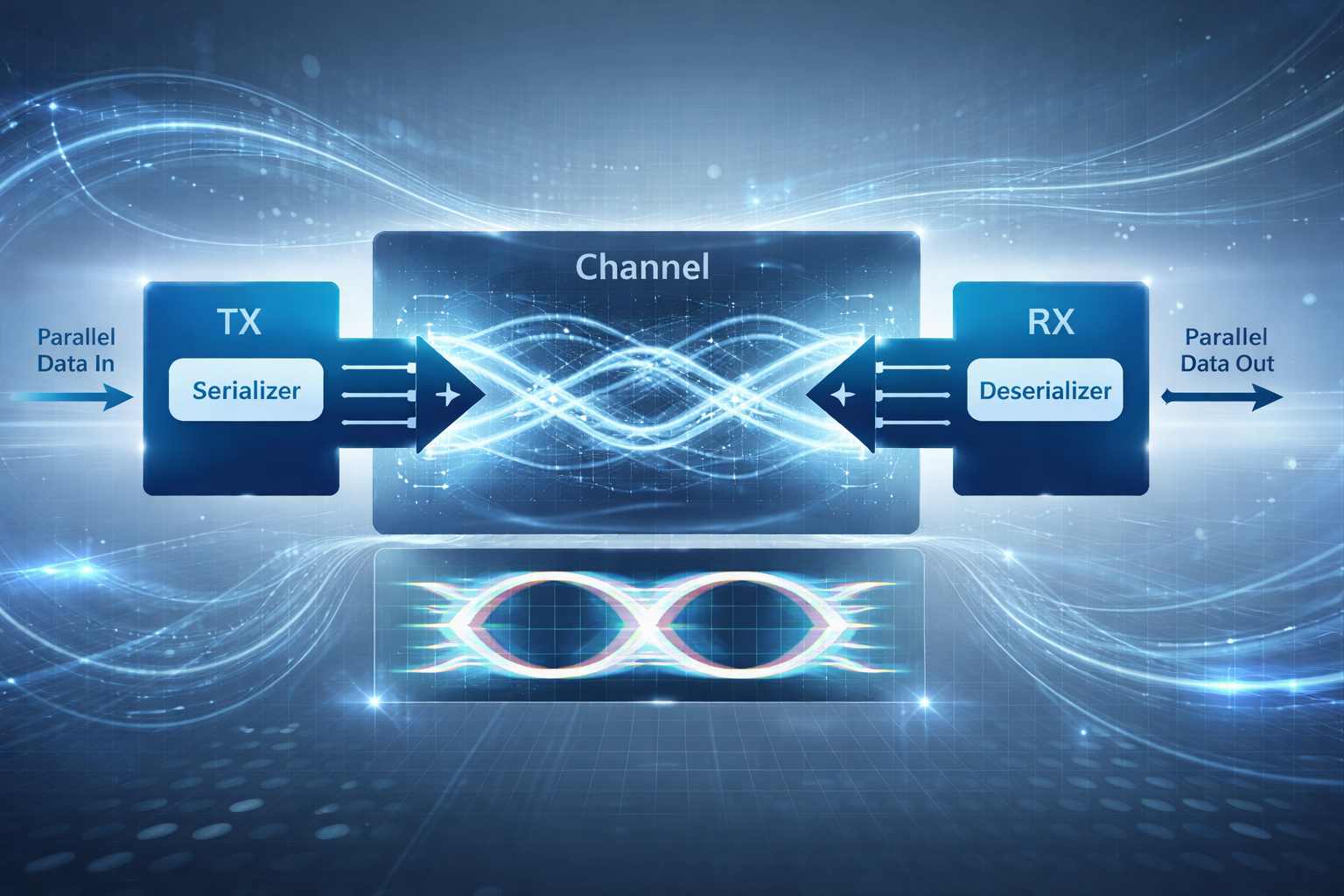
This course provides a structured and in-depth introduction to high-speed Serializer/Deserializer (SerDes) architectures used in modern communication integrated circuits. Students will study channel modeling, signal impairments, equalization techniques (including FFE and DFE), and clock-data recovery (CDR) systems, with a strong focus on architectural trade-offs and design intuition. The course is designed for senior undergraduate and graduate students, as well as practicing engineers, seeking a solid foundation for advanced work in high-speed link design, communication IC development, or related research areas.

Course Instructor
Dr. Juan Bonetti PhD-level instructor with extensive experience in high-speed serial links, SerDes architectures, and communication system modeling. This course is based on academic and industry-oriented material covering channel modeling, equalization techniques, and clock-data recovery, developed for advanced engineering education.
Course Curriculum
-
1
-
(Included in full purchase)
Course roadmap: TX/RX blocks and the SerDes link
-
(Included in full purchase)
-
2
-
(Included in full purchase)
Understanding Channel Models
-
(Included in full purchase)
Intersymbol Interference and Mitigation
-
(Included in full purchase)
Quiz – Unit 1: SerDes Fundamentals and Channel Effects
-
(Included in full purchase)
-
3
-
(Included in full purchase)
Feed-Forward Equalization (FFE)
-
(Included in full purchase)
Decision-Feedback Equalization (DFE)
-
(Included in full purchase)
-
4
-
(Included in full purchase)
Adaptive Algorithms for SerDes
-
(Included in full purchase)
Maximum Likelihood Sequence Detection (MLSD)
-
(Included in full purchase)
-
5
-
(Included in full purchase)
Designing CDR Systems
-
(Included in full purchase)
Evaluating Performance Trade-offs
-
(Included in full purchase)
Student Reviews
Testimonials build trust — fast. Edit this section to show how your product is making a difference and help your audience purchase with confidence.
This course provides a rare balance between mathematical rigor and architectural intuition. The treatment of channel modeling, FFE/DFE equalization, and CDR design helped me connect abstract models with real SerDes design decisions.
Córdoba, Arg

What sets this course apart is its focus on architectural trade-offs. It doesn’t just explain how SerDes blocks work — it explains why certain design choices are made in real silicon implementations.
Córdoba, Arg
Dr. Bonetti’s explanations reflect deep experience in both academic research and industry-oriented design. The material goes well beyond textbooks and addresses the realities of modern high-speed links.
Celero's Engineer
This course provides a rare balance between mathematical rigor and architectural intuition. The treatment of channel modeling, FFE/DFE equalization, and CDR design helped me connect abstract models with real SerDes design decisions.
Córdoba, Arg
What sets this course apart is its focus on architectural trade-offs. It doesn’t just explain how SerDes blocks work — it explains why certain design choices are made in real silicon implementations.
Córdoba, Arg
Dr. Bonetti’s explanations reflect deep experience in both academic research and industry-oriented design. The material goes well beyond textbooks and addresses the realities of modern high-speed links.
Celero's Engineer
Unlock Your Potential
Enroll now to gain valuable insights into high-speed SerDes architectures and advance your career in electronics and telecommunications.